
In the medical field, brand trust can mean the difference between life and death. For businesses involved in manufacturing or distributing surgical instruments, your brand name isn’t just a label—it’s a promise of precision, safety, and quality. That’s why securing your brand under Trademark Class 10, which covers surgical, medical, dental, and veterinary instruments, is not just recommended—it’s essential.
This guide explains everything you need to know about Class 10 trademark protection, why it matters for your surgical instrument business, and how to register it properly in India.
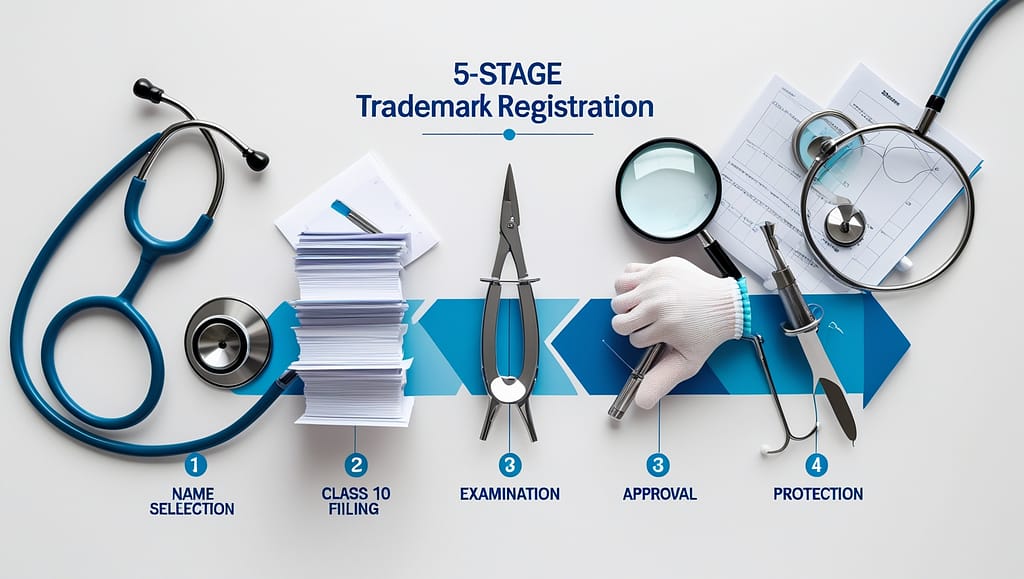
What is Trademark Class 10?
Trademark Class 10 is one of the 45 trademark classes defined by the Nice Classification system, which is internationally recognized. Class 10 specifically covers:
- Surgical instruments
- Medical instruments
- Dental tools
- Orthopedic items
- Suture materials
- Veterinary instruments
- Diagnostic and therapeutic devices
Essentially, if your business manufactures or sells equipment used for medical or surgical purposes—whether in hospitals, clinics, or dental offices—it likely falls under Class 10.
Why Trademark Class 10 is Crucial for Surgical Tool Manufacturers
1. Prevents Counterfeit Products
In the medical industry, counterfeit surgical tools can lead to serious health risks. A trademark under Class 10 legally protects your brand name or logo, helping prevent unauthorized duplication.
2. Builds Trust with Healthcare Professionals
Doctors and surgeons rely heavily on brand trust. A registered trademark adds a layer of professionalism and authenticity to your brand.
3. Legal Protection in Case of Infringement
If someone tries to use a similar brand name for similar tools, a registered Class 10 trademark gives you the legal grounds to stop them.
4. Creates Long-Term Brand Value
Your trademark becomes a valuable business asset over time—boosting your company’s valuation, attracting investors, and helping in brand expansion.
Examples of Products Covered Under Trademark Class 10
Here are some specific products that fall under this class:
- Scalpels, forceps, scissors, retractors
- Syringes, catheters, needles
- Stethoscopes, thermometers
- X-ray machines and diagnostic imaging tools
- Wheelchairs, stretchers, hospital beds
- Surgical gloves, masks, sutures
- Dental drills, mirrors, and other oral tools
- Orthopedic implants, prosthetic limbs
If you produce or distribute any of these items, you should register your trademark under Class 10.
What Products Are Not Covered in Class 10?
To avoid confusion, here are some products often mistaken for Class 10, but fall into other categories:
| Product Type | Correct Trademark Class |
| Medical software or mobile apps | Class 9 |
| Furniture for hospitals | Class 20 |
| Medical services (not equipment) | Class 44 |
| Cleaning or disinfectant liquids | Class 3 |
Registering under the wrong class can delay your trademark or even lead to rejection. That’s why correct classification is crucial.
Step-by-Step Process to Register a Class 10 Trademark in India
Step 1: Do a Trademark Search
Before filing, search the IP India Public Search Tool to check if your brand name or logo is already taken in Class 10.
Step 2: Identify Owner Type
Different fees apply based on whether you’re an:
- Individual/Startup/Small Enterprise
- Company or LLP
Step 3: Prepare the Required Documents
You’ll need:
- Applicant details (name, address, identity proof)
- Brand name/logo
- Power of attorney (if filing through an agent)
- MSME/Startup certificate (if applicable)
- Description of goods (specific to Class 10)
Step 4: File the Application (Form TM-A)
Apply online via the IP India portal or offline by submitting Form TM-A.
Step 5: Examination by Trademark Office
The registry will check:
- If the trademark is distinctive
- If it’s too similar to existing marks
- If it’s descriptive or generic
If objections are raised, a reply must be filed, and sometimes a hearing is required.
Step 6: Publication in the Trademark Journal
If accepted, your mark is published. Anyone who wants to oppose it can do so within 4 months.
Step 7: Trademark Registration Certificate
If no opposition is filed or it’s successfully defended, your Class 10 trademark is registered for 10 years and can be renewed indefinitely.
How Much Does It Cost?
| Entity Type | Govt. Fee (per class) |
| Individual / Startup / MSME | ₹4,500 |
| Company / LLP / Large Enterprise | ₹9,000 |
Professional or legal fees for drafting and filing typically range from ₹2,000 to ₹8,000 depending on complexity and attorney.
Common Mistakes to Avoid
- Filing under the wrong class – Always ensure you’re choosing Class 10 if dealing with surgical/medical instruments.
- Not doing a proper trademark search – Saves you from rejection.
- Using a generic name – Descriptive names like “Best Surgical Tools” may get rejected.
- Not renewing the trademark – You lose legal protection if you forget renewal after 10 years.
- Not hiring a trademark expert – Mistakes in documentation or classification can delay or derail the process.
Trademark Class 10 vs Class 5 & Class 9
| Feature | Class 10 | Class 5 | Class 9 |
| Covers | Surgical/medical equipment | Medicines, pharmaceuticals | Electronic software, apps |
| Suitable for | Device/tool manufacturers | Drug manufacturers | Tech-based medical products |
| Example Products | Scissors, syringes, implants | Painkillers, vaccines | Health monitoring apps |
If you deal in both physical tools and medical software, you may need to register in multiple classes (Class 9 and 10).
Real-Life Example: How Trademark Helped a Surgical Brand
A small surgical instrument company in Chennai trademarked its unique brand of ergonomic scalpels. Months later, a competitor launched similar-looking products under a confusingly similar name. The Chennai firm took legal action using its registered Class 10 trademark and successfully stopped the imitation in court.
Without a trademark, they would have had no legal ground to defend their brand identity.
Conclusion
If you manufacture, sell, or distribute surgical instruments, getting your trademark under Class 10 is not optional—it’s vital. It protects your innovation, builds trust among medical professionals, and prevents others from riding on your brand’s success.
As the healthcare and surgical market becomes more competitive and global, a registered trademark not only safeguards your products in India but also strengthens your international presence.
Partner with VMK Professionals for Hassle-Free Trademark Registration
At VMK Professionals, we specialize in helping medical and surgical brands protect their intellectual property with fast, expert-driven trademark registration. Whether you’re a startup, MSME, or an established medical brand, we handle everything—from trademark search to filing and defense—with complete transparency and accuracy.
Why Choose VMK Professionals?
- End-to-end support
- Expert trademark attorneys
- Affordable pricing
- Pan-India service
📞 Contact us today or visit www.vmkpros.com to get started with your Class 10 trademark and secure your brand’s future in the healthcare sector.