
Introduction
In the world of fashion, where trends change rapidly, brand identity is everything. Accessories — from buttons, laces, and zippers to ribbons, hairpins, and brooches — play a vital role in defining a brand’s uniqueness. But as fashion businesses grow, protecting these creative elements becomes crucial. This is where Trademark Class 26 comes in.
Trademark Class 26 covers a wide range of fashion accessories and sewing supplies, ensuring that your designs, brand name, and product identity are legally protected from imitation or misuse. Whether you run a boutique, a sewing supply business, or a large-scale accessory manufacturing brand, registering your trademark in Class 26 is an essential step toward building and safeguarding your fashion legacy.
In this article, we’ll explain in simple terms how Class 26 protection works, what products it covers, and the top benefits of registering your fashion accessory brand under this class.
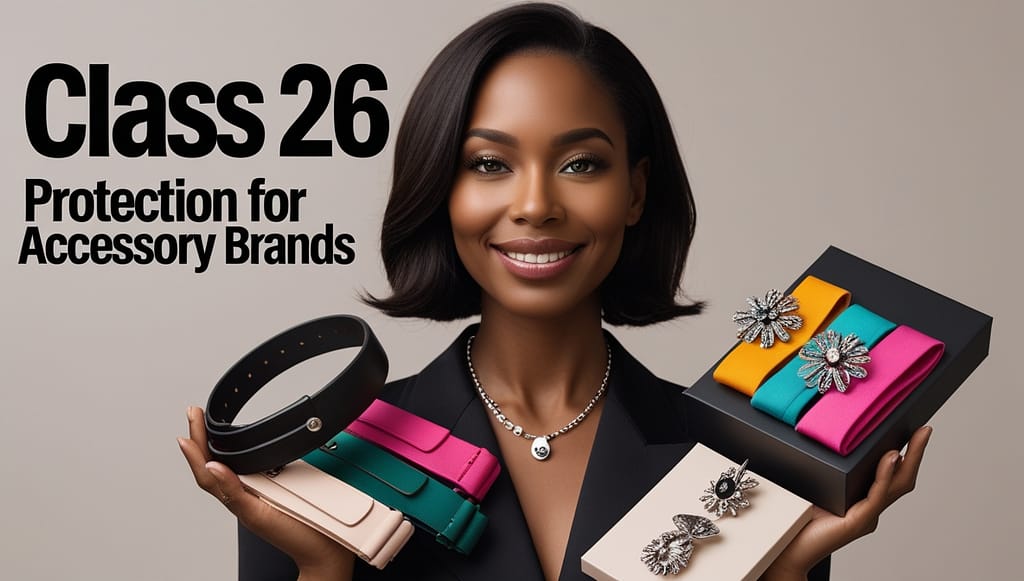
What Is Trademark Class 26?
Trademark Class 26 falls under the Nice Classification system, which categorizes goods and services for trademark registration. Specifically, Class 26 includes:
“Lace and embroidery, ribbons and braid; buttons, hooks and eyes, pins and needles; artificial flowers; hair ornaments and wigs.”
In simple words, if your brand sells or manufactures fashion accessories, sewing items, or decorative materials, Class 26 is where your trademark should be registered.
Products Covered Under Trademark Class 26
Here’s a detailed list of common products protected under Class 26:
- Sewing and tailoring items: buttons, hooks, snaps, pins, needles, and zippers
- Decorative materials: laces, ribbons, braids, and fringes
- Hair accessories: barrettes, hair clips, hair bands, wigs, and hair extensions
- Artificial decorative items: artificial flowers, fruits, and leaves
- Embroidery supplies: threads for embroidery, trimmings, and sequins
- Fashion ornaments: badges, beads, buckles, bows, brooches, and tassels
Essentially, anything that adds decorative or functional value to fashion, garments, or accessories can fall under Trademark Class 26.
Why Trademark Protection Is Vital for Fashion Accessories
The fashion industry is one of the most competitive and fast-moving sectors in the world. With countless designers and brands launching every day, the risk of brand imitation or counterfeiting is high. Without proper trademark protection, anyone could copy your designs or use a similar name, confusing customers and damaging your reputation.
Trademarking your accessory brand under Class 26 gives you exclusive rights to use your brand name, logo, and designs for your registered products. It ensures that no competitor can legally sell identical or confusingly similar items under your brand identity.
Top Benefits of Trademark Class 26 Protection for Fashion Accessory Brands
1. Legal Ownership of Your Brand
Registering your fashion accessory brand in Class 26 legally establishes your ownership of the brand name and logo. Once approved, no one else can use a similar or identical mark for similar products. This legal ownership gives you the power to take action against infringers or counterfeiters.
2. Builds Brand Recognition and Customer Trust
A registered trademark signals professionalism and authenticity. When customers see your brand with a ™ or ® symbol, it communicates that your products are genuine and high-quality. This builds trust and loyalty, helping you stand out from unregistered or imitation brands in the market.
3. Protects Unique Designs and Accessories
Many fashion accessory brands invest heavily in designing unique buttons, ribbons, or artificial flowers. A trademark ensures that your creative elements and product aesthetics are protected from being copied by competitors.
For example, if your brand is known for signature lace patterns or decorative hair clips, trademark protection prevents others from selling similar-looking products using your brand identity.
4. Expands Business Opportunities
Having a trademark opens doors to partnerships, franchising, and licensing opportunities. Many retailers and distributors prefer working with brands that have registered trademarks because it reduces legal risks. It also increases your brand valuation and credibility in the market.
5. Easier Expansion into Global Markets
Trademark registration under Class 26 not only protects your brand in India but also simplifies the process of registering your mark in international jurisdictions through the Madrid Protocol. This means your brand can confidently expand into new markets without fear of infringement.
6. Legal Protection Against Counterfeit Products
Counterfeiting is a serious issue in the fashion industry. Trademark protection allows you to take legal action against sellers producing fake versions of your products. You can issue cease-and-desist letters, file infringement suits, and even seek damages from violators.
7. Boosts Marketing and Brand Value
A strong, legally protected brand identity adds immense value to your marketing efforts. It gives you a unique selling proposition (USP) and allows you to confidently promote your brand without worrying about copycats. Over time, your trademark becomes a valuable intangible asset for your business.
Examples of Fashion Accessory Brands Under Class 26
Here are a few examples of brands that fall under Trademark Class 26:
- Velcro® – Known for its hook-and-loop fastening products
- Swarovski® – Famous for beads, trimmings, and decorative embellishments
- Scünci® – A popular hair accessory brand
- Coats® – Specializes in threads and sewing supplies
These brands have successfully protected their unique identities by registering trademarks under Class 26, ensuring they maintain their competitive edge globally.
How to Register a Trademark for Your Fashion Accessory Brand in Class 26
Here’s a step-by-step guide to help you file your trademark correctly:
Step 1: Conduct a Trademark Search
Before filing, it’s important to check if your brand name or logo is already registered or too similar to existing trademarks. You can perform a free search on the IP India website (https://ipindia.gov.in) under Class 26.
If your search shows no conflicting marks, you can proceed confidently with the filing process.
Step 2: Choose the Correct Class and Description
Ensure that you select Class 26 while filing. Mention all relevant goods under this class — for example:
“Buttons, lace, embroidery, ribbons, hooks, artificial flowers, and hair accessories.”
Choosing accurate descriptions ensures that your trademark covers all your products.
Step 3: File the Trademark Application
You can file your application online via the Trademark Registry portal or offline at the trademark office. The application should include:
- Applicant’s details (individual or company)
- Trademark name or logo
- Description of goods (Class 26)
- Power of Attorney (if filed through an agent)
- Applicable government fees
Step 4: Examination and Objection Handling
After submission, the Trademark Office examines your application. If there are any objections (for similarity or other reasons), you’ll receive an Examination Report. You must respond to it within the stipulated time, explaining why your mark is unique.
Step 5: Publication in Trademark Journal
Once approved, your trademark will be published in the Trademark Journal for public review. If no one objects within 4 months, your application proceeds to registration.
Step 6: Trademark Registration Certificate
After the publication period, your trademark gets officially registered, and you’ll receive a Trademark Registration Certificate. You can now use the ® symbol with your brand name.
Step 7: Trademark Renewal
Trademarks are valid for 10 years from the date of registration. You must renew it before expiry to maintain your rights and avoid losing protection.
Common Mistakes to Avoid While Filing in Class 26
- Choosing the wrong class (e.g., registering under Class 25 instead of Class 26)
- Failing to perform a proper trademark search
- Using generic names like “Lace Store” or “Button World”
- Not mentioning all relevant goods under the class
- Ignoring examination reports or missing renewal deadlines
Avoiding these mistakes ensures your trademark is valid, enforceable, and provides full protection to your brand.
Conclusion
Fashion accessories — whether they are small buttons, elegant laces, or decorative hair clips — play a big role in brand identity. Protecting them through Trademark Class 26 not only secures your creative work but also strengthens your brand’s position in the market.
By registering under Class 26, you gain exclusive ownership, legal protection, and long-term business value. It’s an investment that every serious fashion accessory business should make.
About VMK Professionals
At VMK Professionals, we specialize in trademark registration, renewal, and brand protection for businesses across India. Whether you’re launching a new fashion label or managing a growing accessory brand, our expert team ensures a smooth and hassle-free trademark filing process under Class 26 and other relevant categories.
Let us help you protect your brand identity before competitors do.
📞 Contact us today to get started with your Trademark Class 26 registration.