
In the competitive world of kitchenware and home essentials, building a strong brand identity is key to gaining customer trust and market dominance. Whether you’re selling ceramic cookware, plastic containers, glass bottles, or home cleaning tools, protecting your brand legally is just as important as product quality.
That’s where Trademark Class 21 comes in.
This guide will help you understand everything you need to know about Trademark Class 21 in India, including:
- ✅ What it covers
- ✅ Who should register under it
- ✅ Examples of products
- ✅ Trademark registration process
- ✅ Documents and fees
- ✅ Common mistakes to avoid
Let’s dive in.
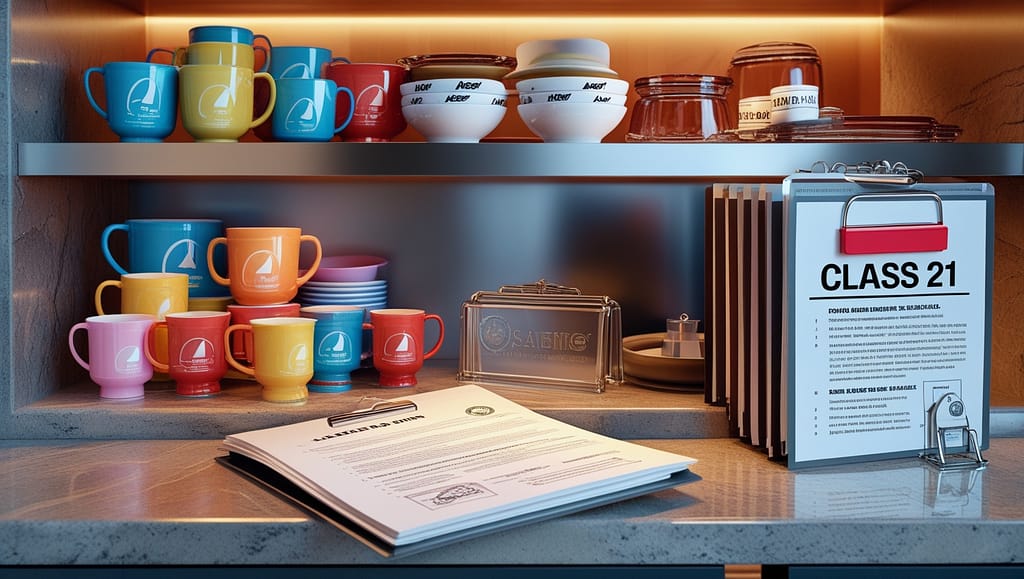
🧽 What Is Trademark Class 21?
Trademark Class 21 is part of the Nice Classification system and is designated for:
“Household or kitchen utensils and containers; combs and sponges; brushes (except paint brushes); brush-making materials; articles for cleaning purposes; steelwool; unworked or semi-worked glass (except building glass); glassware, porcelain, and earthenware not included in other classes.”
This means brands dealing in kitchen utensils, household containers, cleaning tools, and similar items should register under Class 21.
🏠 Who Should Register Under Class 21?
You should register under Class 21 if your business deals in:
- Kitchenware brands
- Tupperware or plastic container companies
- Glassware and crockery manufacturers
- Home cleaning products (non-chemical tools like brooms, brushes, mops)
- Decorative utensils
- Reusable water bottles, jars, lunch boxes
- Bathroom accessories (like soap holders or toothbrush cases)
Whether you’re a manufacturer, retailer, online seller, or exporter—if you’re using a brand name or logo for household/kitchen goods, you must protect it under Class 21.
🧺 Common Products Covered Under Class 21
Here’s a detailed list of the types of products protected by a Class 21 trademark:
🔹 Kitchenware
- Cooking pots, pans, tawa
- Spatulas, ladles, serving spoons
- Tiffin boxes and lunch carriers
- Measuring cups and spoons
- Mixing bowls
- Bakeware
🔹 Containers & Storage
- Tupperware and storage boxes
- Plastic, glass, and steel jars
- Food containers with lids
- Water bottles and thermos flasks
🔹 Cleaning Tools
- Brooms, brushes (not paint)
- Toilet brushes, scrubbing pads
- Mops, dusters, gloves for cleaning
- Sponge cloths and dish-washing tools
🔹 Bathroom & Personal Care Items
- Soap dishes, toothbrush holders
- Shaving brushes, grooming kits
- Hair brushes and combs (non-electric)
🔹 Tableware & Crockery
- Plates, bowls, and serving trays
- Glass tumblers and mugs
- Decorative porcelain and ceramic items
🔹 Decorative or Functional Glassware
- Unworked or semi-worked glass items
- Non-building glass items like candle holders, vases
✅ Remember: Items made mostly of metal (e.g., steel cookware) may also require Class 6 registration.
🛑 What Is Not Covered Under Class 21?
To avoid confusion, here’s what’s not covered:
- Building glass and mirrors → Class 19 or 20
- Furniture and home décor → Class 20
- Cleaning chemicals and detergents → Class 3
- Appliances (electric blenders, toasters, etc.) → Class 7 or 11
✅ Be very careful when classifying multi-purpose or electronic products.
🔒 Why Register a Trademark Under Class 21?
Registering your brand under the right trademark class ensures legal exclusivity and brand protection in your niche.
Key Benefits:
- Legal Right to Your Brand Name
Only you can use the name/logo for Class 21 products in India. - Prevents Competitors from Copying
Trademark gives you the power to stop copycats or lookalike products. - Boosts Consumer Trust
Customers trust registered brands more, especially in household categories. - Essential for Online Marketplaces
Platforms like Amazon and Flipkart ask for registered trademarks for brand stores. - Adds Long-Term Business Value
A trademark is an intellectual property asset that enhances your brand’s valuation.
📋 Documents Required for Class 21 Trademark Registration
| Document | Purpose |
| Brand Name / Logo | The mark you want to protect |
| Identity Proof | PAN card, Aadhaar, etc. of applicant |
| Business Proof | Company incorporation or MSME certificate |
| Address Proof | Utility bill or office lease agreement |
| Power of Attorney (Form TM-48) | If filing through agent |
| Description of Products | E.g., “Glass bottles, storage containers, cookware” |
| Date of First Use | Optional, if already in the market |
✅ Startups and MSMEs can benefit from reduced government fees.
📝 How to Register a Trademark for Class 21 (Step-by-Step)
Here’s a complete guide to registering your kitchenware or household brand:
🔍 Step 1: Conduct a Trademark Search
Before filing, search the IP India database:
🔗 https://ipindiaonline.gov.in/tmrpublicsearch/frmmain.aspx
Check for:
- Similar or identical trademarks
- Wordmarks and logos already registered under Class 21
- Trademark status (registered, objected, abandoned)
🧾 Step 2: Draft a Product Description
List your products clearly under Class 21.
Example:
“Trademark registration for brand dealing in plastic kitchen containers, ceramic bowls, glass bottles, mops, and scrubbing brushes under Class 21.”
📤 Step 3: File the Trademark Application (Form TM-A)
You can:
- File online via IP India Filing Portal
- Or file offline through a Trademark Registry Office
💸 Step 4: Pay the Government Fee
| Applicant Type | Government Fee (per class) |
| Individual / Startup / MSME | ₹4,500 |
| Company / LLP / Others | ₹9,000 |
For multiple classes (e.g., Class 21 + Class 6), fees apply per class.
📜 Step 5: Receive Acknowledgement and Use ™ Symbol
Once your application is filed, you’ll get a TM Number and can start using the ™ symbol on your products and packaging.
🧐 Step 6: Wait for Examination
A trademark examiner will review your application. Possible outcomes:
| Status | Meaning |
| Accepted | Moves to journal publication |
| Objected | You need to respond within 30 days |
| Refused | Application is rejected (you may appeal) |
📣 Step 7: Journal Publication and Opposition Period
If accepted, your mark is published in the Trademark Journal for 4 months. Anyone can oppose it during this time.
If no opposition is filed—or you win the opposition—you move to final registration.
🏁 Step 8: Registration and ® Symbol
Once approved, you get the Certificate of Registration, and can now use the ® symbol legally with your brand.
⏳ How Long Is a Trademark Valid?
- Validity: 10 years from the filing date
- Renewable every 10 years by paying renewal fee (₹9,000)
- No limit to renewals — your brand can stay protected forever
❌ Common Mistakes to Avoid in Class 21 Trademark Filing
| Mistake | Consequence |
| Filing under wrong class | May not protect your actual products |
| Using descriptive names (e.g., “Best Utensils”) | Higher chance of rejection |
| Not conducting a trademark search | Leads to legal objections |
| Only registering logo but not brand name | Leaves name vulnerable to misuse |
| Ignoring objection notices | Trademark may be abandoned |
🔁 Multi-Class Filing: When You May Need More Than Class 21
Your brand may also need to register under other classes like:
| Class | Covers |
| Class 6 | Steel utensils and cookware (metal-based) |
| Class 11 | Electric kitchen appliances |
| Class 35 | Retail or online store services |
| Class 3 | Cleaning agents or soaps |
| Class 20 | Storage cabinets and furniture |
✅ Consider multi-class protection if you have a diverse product line.
📌 Real-Life Examples of Brands in Class 21
| Brand | Products |
| Tupperware | Kitchen storage containers, boxes |
| Borosil | Glass bottles, bowls |
| Milton | Bottles, lunch boxes, thermoware |
| Cello | Utensils, containers, mop buckets |
| Scotch-Brite | Scrubbers, cleaning brushes |
These successful brands are protected under Class 21 — and possibly other related classes depending on product materials.
📞 Need Help with Trademark Filing?
Trademark registration can get complex, especially when it involves:
- Multiple products
- Mixed materials (glass, plastic, metal)
- Logo and name protection
Let VMK Professionals handle the process end-to-end — from brand search and class selection to filing, objection handling, and renewal.
✅ Final Thoughts
If your business involves kitchenware, household products, or cleaning tools, Trademark Class 21 is the category where your brand belongs. Filing under the correct class ensures that your brand stays protected, your competitors stay away, and your reputation grows in a cluttered market.
Whether you’re launching a new D2C kitchen brand or scaling an established one, start by securing what matters most—your brand identity.